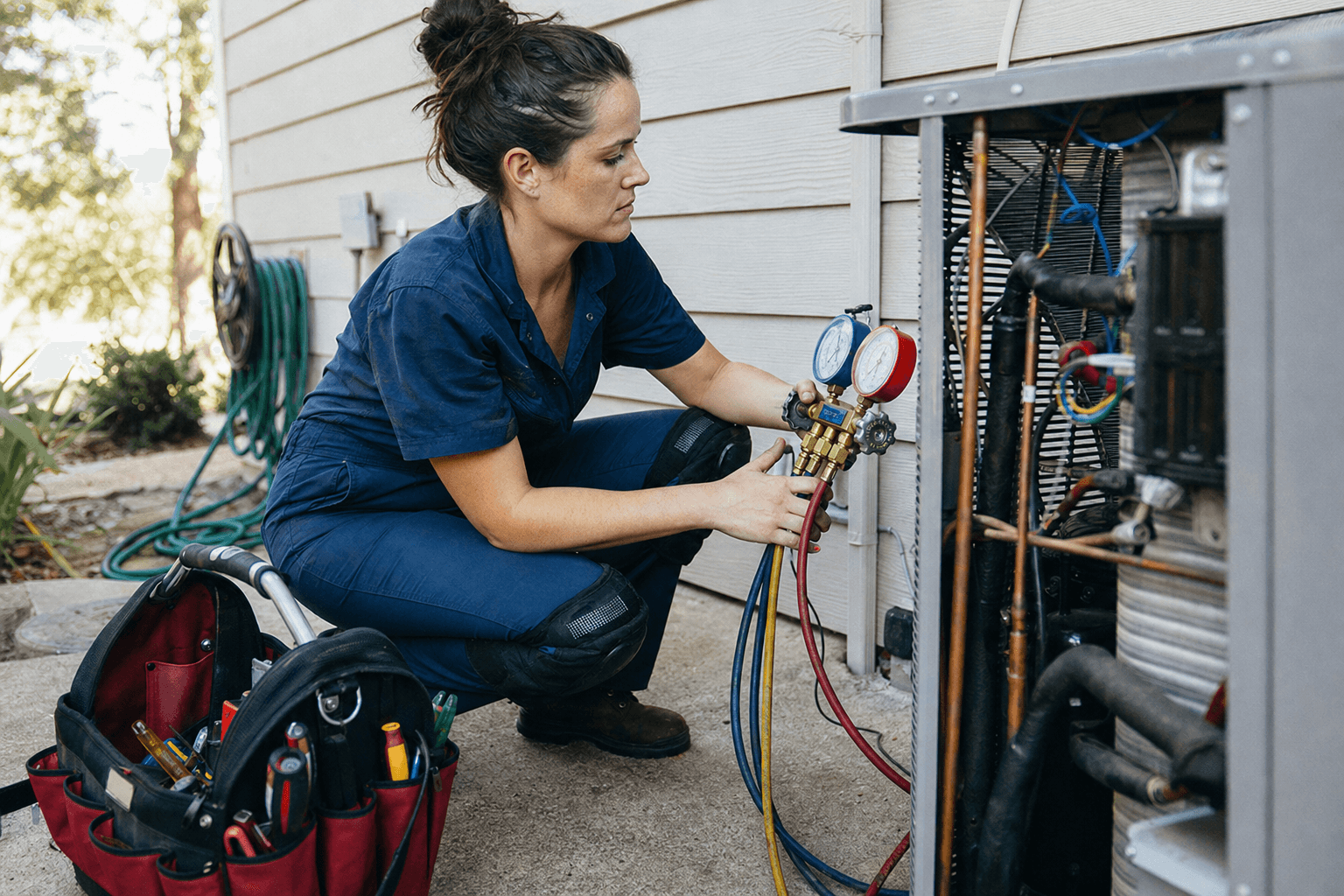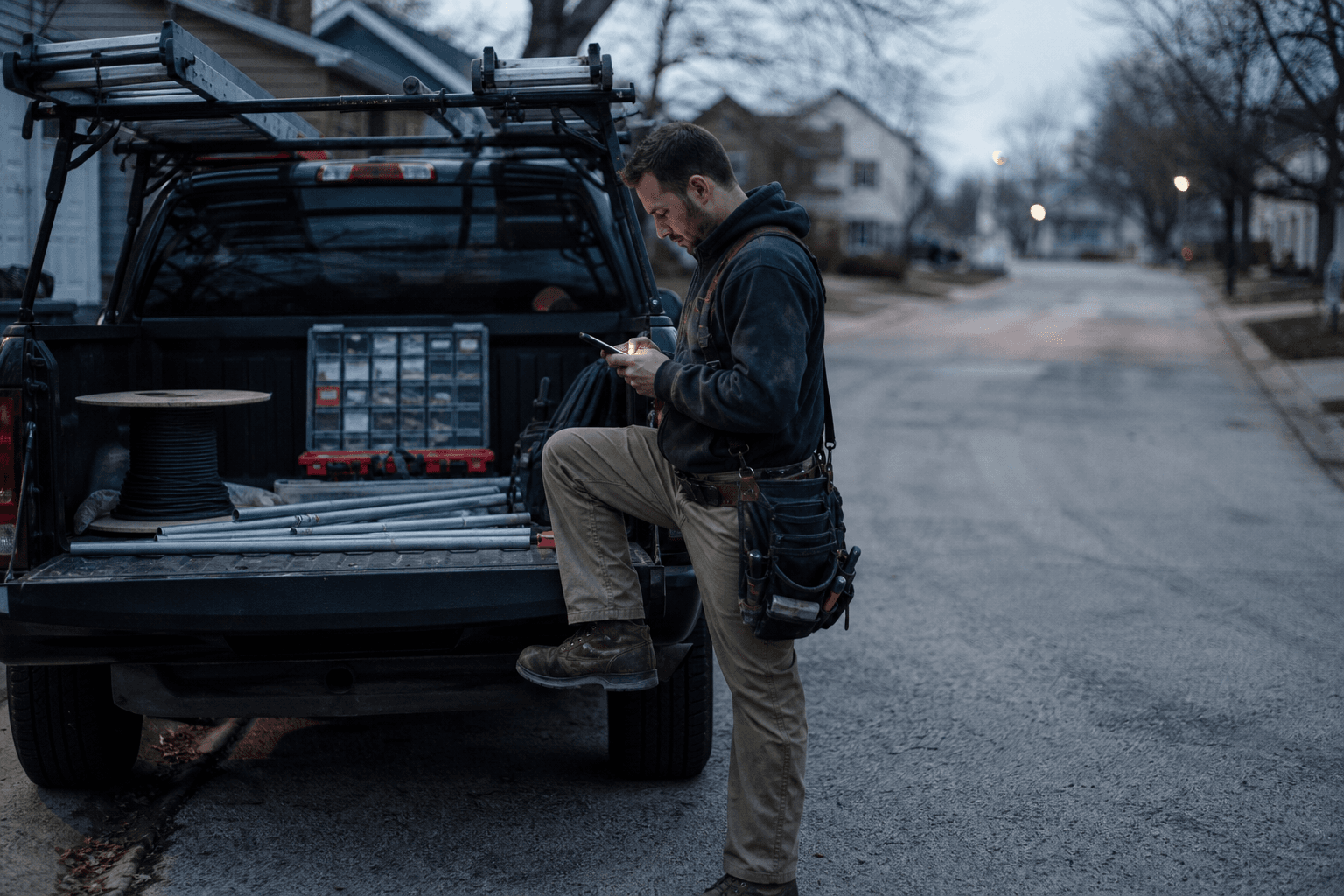
Electrical work reaches AI through three different doors, and most electricians only think about one. There's the emergency: the panel dies, half the house has no power, and the homeowner needs someone today. There's code and permit work: a service upgrade, a subpanel, and the fast-growing one, an EV charger install where the buyer has genuinely no idea who to call. And there's new construction, where a builder is quietly deciding which electrical sub to invite. 45% of US consumers used AI tools like ChatGPT for local business recommendations in the past year, up from 6% the year before (BrightLocal, 2026). Each of those three doors is a different question, and each is winnable with a different page.
What electrical questions do homeowners actually ask AI?
Emergencies are the loudest: "half my house lost power", "burning smell from the breaker panel", "do I need an electrician or the power company". The asker hires within the hour. Then come the code questions, which are really cost-and-feasibility questions: "how much to upgrade to a 200 amp service", "do I need a permit to add a circuit", "cost to install a Level 2 EV charger". And the diligence family runs under all of it: "is this electrician licensed", "fair price to replace an electrical panel". Electrical has one advantage plumbing and HVAC don't share as cleanly. Your license is a hard fact a state board publishes, and the engines can check it.
Why is EV charger installation the query worth owning?
Because it's the electrical question with the most confused buyers and the least published answer. A homeowner who just bought an electric car has no mental list of who installs chargers. They don't know if their panel can handle it, whether they need a permit, or what it should cost. So they ask AI, in plain language, and the engine answers with whoever explained it clearly. Almost no electrician has written that page for their specific city, which means the citation is sitting unclaimed. This is the rare query where being early beats being big.
How does your license make you citable?
Electrical is a licensed trade in every state, and that license is a verifiable claim the engines like. When your license number sits on your homepage and matches your state board's registry exactly, you give the model something it can ground a recommendation on. An anonymous site asking people to "call for a free estimate" gives it nothing checkable, so it reaches for a directory instead. Put the license number, the classes you hold, your insurance, and your years in business in plain text where a crawler reads them, not baked into an image.
Who does AI name for electrical work?
Mostly the big platforms and the electricians who look complete on them. In Local Dominator's analysis of 267,280 AI citations drawn from its own clients' local-marketing campaigns, the most-cited sources were Yelp, Google, Reddit, Facebook, and Angi, with BBB and HomeAdvisor further down. That's a vendor's convenience sample, not an independent study, so read the ordering rather than the raw counts. The 5W Public Relations AI Visibility Index (Q1 2026) probed HVAC and plumbing, the two trades closest to electrical, and found roughly 87% of independent contractors had effectively no AI citation share in their own metro. It's a PR firm's prompt probe rather than a peer-reviewed study, and it didn't test electricians, but the pattern it describes is the one you're up against.
What should an electrician publish to get cited?
- A city-specific EV charger install guide with local cost ranges, panel-capacity guidance, and the permit your city requires.
- A panel and service-upgrade cost page: 100 to 200 amp, subpanels, and what pushes the price, in honest ranges.
- An emergency page that states your real response time and coverage area in plain, quotable text.
- Your license number, classifications, and insurance in the footer, matching your state board registry exactly.
- Project pages with specifics: the city, the job (panel swap, EV circuit, whole-home rewire), the problem solved, and dated photos.
How do you measure whether any of this is working?
Not with a single search. Each engine keeps its own sources and its own answer, so being named on one tells you little about the others. Profound found that ChatGPT and Perplexity overlap on only 11% of the domains they cite, with 37.4% unique to ChatGPT and 51.6% unique to Perplexity. You can be the electrician Gemini names on the strength of Google reviews while ChatGPT never mentions you because no EV-charger page exists for it to quote. Measurement means a fixed set of your market's electrical questions, asked repeatedly on every engine, tracked as the share of answers that name you. Baseline, publish, re-measure.